Top-rated independent appliance repair across the Mid-South
What Hard Water Does to Appliances, Year After Year
Your dishwasher leaves a film on the glasses. The coffee maker takes forever. The water heater knocks like somebody's tapping a pipe with a wrench. None of that feels like an emergency, so you let it ride. Around Middle Tennessee, a lot of that comes down to hard water. It doesn't break things overnight. It builds up, then something quits.
Call (888) 857-9883- Real people on the phone
- 7 days a week
- Quote in writing before any work
Taking calls until 5:00 PM CT
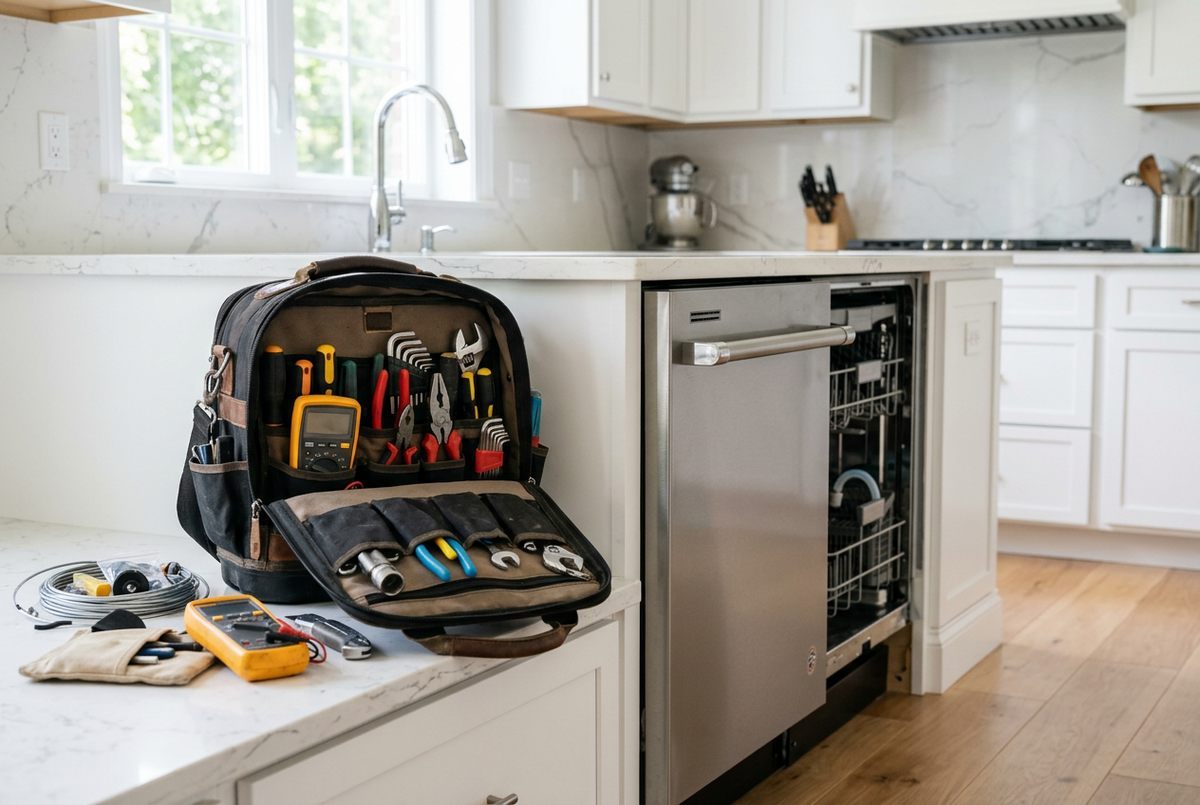
Logan Appliance Repair service team · field-reviewed before publishing
What Hard Water Actually Does Inside Your Appliances
Hard water carries dissolved calcium and magnesium. When water heats up or dries out, those minerals stay behind as a chalky crust. Inside a water heater, that crust settles on the bottom and traps heat against the tank. Inside a dishwasher, it coats the heating element, the spray arm holes, and the little water inlet screen. In an ice maker, it narrows the fill tube. None of that trips a breaker or throws an error the first year. It just makes every part work harder and run hotter. Heat is what kills pumps, valves, and elements. So the mineral isn't the killer. The extra strain it creates is.
The Simple Habit That Prevents Most of It
Run something acidic through the machine on a regular schedule. For a dishwasher, put a cup of plain white vinegar in a bowl on the top rack and run a hot cycle with nothing else inside. Or use a store-bought descaler tablet made for dishwashers. For a coffee maker, same idea, then two clean water cycles behind it. For a front-load washer, run the clean-cycle setting with a washer cleaning tablet. Also pull the dishwasher's bottom filter, if yours lifts out by hand, and rinse the grit off under the tap. That's it. No panels, no tools, no shutoffs.
How Often to Do It Around Here
Once a month for the coffee maker. Every one to three months for the dishwasher, depending on how cloudy your glasses come out. Every three months for the washer clean cycle. Rinse the dishwasher filter every couple of weeks if you scrape plates lightly. Wipe the shower door and faucet aerators when you see white spots, because that same crust is forming where you can't see. If you have a water softener, check the salt level monthly. A softener out of salt is just a plumbing decoration. Set a phone reminder on the first of the month and knock all of it out at once.
Warning Signs Prevention Time Has Passed
Dishes come out gritty even after a vinegar run. Water heater rumbles or pops when it fires. The dishwasher won't fill, or fills so slowly the cycle never finishes. Ice cubes are hollow, small, or smell off. A washer takes far longer than it used to because the inlet screens are choked. Any faint burning smell near the dishwasher, or a heating element that no longer dries the load, means the element is likely scaled and struggling. At that point you're past cleaning and into parts. Stop running it and call us. Around storm season we also see surge damage stack on top of scale, and the two look alike from the outside.
What We Do When Scale Has Already Won
We come out, listen to the machine, and check the pieces you can't safely reach. That means inlet valves, heating elements, pump housings, and sensors buried behind the tub. Scaled valves get replaced, not scrubbed, because the seat inside is already pitted. Elements coated in white crust get swapped. If a control board took a hit during a surge, that's a separate repair, and we'll tell you plainly which problem you have. We repair all major brands as an independent shop. If the machine is far enough gone that repair doesn't make sense, we'll say so instead of stringing you along.
What Hard Water Does to Appliances, Year After Year — common questions
Will a water softener fix appliances that are already scaled?
It stops new buildup, which helps a lot. It won't dissolve the crust already sitting on a heating element or in a valve. Soft water plus descaling cycles will loosen some of it over time, but damaged parts stay damaged.
Is vinegar safe for my dishwasher's seals?
An occasional vinegar cycle is fine for most machines. Running it every week can dry out rubber gaskets over time. If you'd rather not risk it, use a descaler tablet made for dishwashers instead.
How do I know if my water is hard?
White crust on faucets and shower glass is the giveaway. Soap that won't lather is another. Cheap test strips from a hardware store give you a number. Your local water utility also publishes hardness figures.
How it works
- Step 1
Tell us the symptom
Call us or fill out the form and tell us what you hear, smell, or see. Buzzing, leaking, no heat. Plain talk is fine. We'll ask a few questions and set a visit window.
- Step 2
We come look
A technician shows up in the window, pulls the unit out, and tests it. No guessing games. We explain what failed and why, in words that make sense on your back porch.
- Step 3
We fix it
Common parts ride with us, so a lot of repairs finish on that first visit. If a part has to be ordered, we tell you plainly and set the return date before we pull out of your driveway.
- A real person answers
- Open 7 days
- Written quote before work starts
Why homeowners call us
- Storm-season surge damageLightning and blinking power hurt control boards. You get an oven that lights up but won't heat, or a washer that quits mid-cycle. We test boards and wiring before we replace anything, so you know what the surge actually took out.
- Clay dust and lintRed clay dust and lint choke dryer vents and condenser coils. That's where long dry times and a hot laundry room come from, and it's why a fridge runs nonstop. We check airflow every visit, because a clogged vent kills a good machine slowly.
- Straight talk, no runaroundWe tell you what's wrong and what it takes to fix. If a machine is worn past sense, we say that too, and you decide. No pressure and no jargon. We don't dress up an upsell as advice.
- Independent and localWe're a Nashville crew, not a call center. As an independent shop we repair all major brands. Call us and you get a real person, somebody who knows the roads we drive.
- All major brands, gas & electricIndependent service on Whirlpool, LG, Samsung, GE, Maytag, Bosch, KitchenAid and the rest.
- Straight answersNot worth fixing? We say that out loud, and often it saves you the visit fee.
About this guide
If the safe checks didn't fix it, the fault is real
Describe what you found and we'll take it from there. Booking takes about a minute.
- A real person answers
- Open 7 days
- Written quotes
- All major brands
- Gas & electric
Rather not call? Get a free quote →