Top-rated independent appliance repair across the Mid-South
When the Ice Maker Goes Quiet
An empty ice bin almost always comes down to water, temperature, or the harvest cycle, and you can check the first two yourself in about ten minutes. Maybe you found one sad clump frozen together, or a thin sheet of ice on the bottom. The fridge still runs cold, so what gives? Ice makers fail in a handful of predictable ways. Let's walk through it.
Call (888) 857-9883- Real people on the phone
- 7 days a week
- Quote in writing before any work
Taking calls until 5:00 PM CT
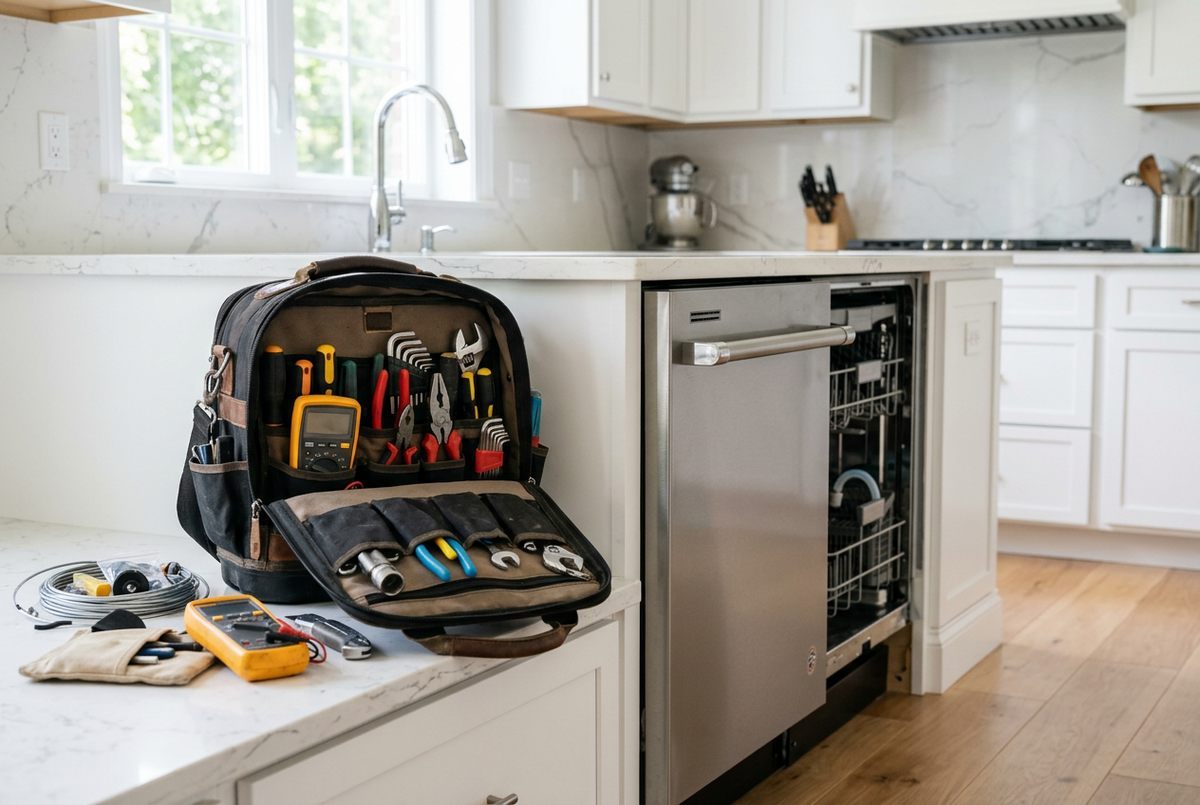
Logan Appliance Repair service team · field-reviewed before publishing
What an Empty Ice Bin Is Telling You
An ice maker needs water coming in and cold air around the mold, plus a working harvest cycle to dump the cubes. Take away any one of those and production stops. The clue is in what's left behind. No ice at all and a bone-dry mold usually means water never arrived. A solid block or cubes welded together points at a slow trickle or a warm spot, while ice that sat in the mold and never released is a harvest problem. Small hollow cubes mean low water pressure. Look hard at what you've got before you touch anything. That detail saves guessing later.
The Cheap Stuff First: Switches, Bins, and Ice Bridges
Start with the free fixes. Many ice makers have an on/off switch or a wire shutoff arm inside the freezer, and a bag of frozen peas can push that arm up and tell the machine the bin is full. Check that the bin is seated all the way back. If it's cocked sideways the auger won't turn, and the maker thinks it's stalled. Then look for an ice bridge, a frozen sheet welding cubes to the mold. Pop it loose with a plastic spoon, never a knife. Make sure the freezer door is actually sealing too. A door left ajar warms the mold enough to stop production.
Water Supply: The Line, the Filter, the Pressure
No water in means no ice out. Change the water filter if it's been six months or more, and sooner than that if you're on well water or a line carrying clay silt. A clogged filter starves the valve. Next, look behind the fridge for the small copper or plastic supply line, because a kink from shoving the fridge back against the wall is common. If you have a saddle valve or shutoff under the sink, confirm it's all the way open. Now try the dispenser. Water pours normally but no ice forms? Supply is probably fine and the trouble is further in. If water dribbles, you've found your lead.
Freezer Temperature and Airflow
Ice makers want the freezer around zero degrees. Warmer than about ten and cycles stretch out or quit altogether. Set a cheap thermometer in the freezer overnight and read it in the morning. While you wait, pull stacked boxes away from the back vents, since blocked airflow leaves the mold sitting in a warm pocket. Vacuum the dust off the coils under or behind the fridge. Around here, HVAC returns and gravel drives push a lot of fine dust into that grille. If the freezer still can't hold zero after all that cleaning, you're looking at the sealed system or the defrost side, not the ice maker. That's a service call.
What We Do That You Can't From the Kitchen Floor
When we show up, we meter the inlet valve and read water pressure right at the valve instead of guessing. We test the mold thermistor and the harvest motor, and we look for a heater that no longer lets go of the cubes. Storm season matters too. A power surge can cook the control board while the rest of the fridge keeps humming along, and that only shows up on a bench test. We check the fill tube for a hidden ice plug and inspect the drain and defrost path. Then we tell you plainly what failed and what parts it takes. Call us and describe what you saw in the bin.
When the Ice Maker Goes Quiet — common questions
How long after a fix before I get ice again?
Give it about 24 hours. A cycle runs a couple of hours, and the freezer has to pull back down to temperature first. Toss the first two batches. Early cubes often taste like plastic or stale filter.
Should I just replace the whole ice maker?
Not always. If water never reaches the mold, a new maker changes nothing. Check the valve, the filter, and the freezer temperature first, then decide. Swapping the unit blind is a common way to spend money twice.
Why are my cubes small and hollow?
That's usually low water flow. A partly clogged filter, a kinked line, or a shutoff that's only half open lets in less water than the mold wants. A freezer running too warm will do it too, so check both.
How it works
- Step 1
Tell us the symptom
Call us or fill out the form and tell us what you hear, smell, or see. Buzzing, leaking, no heat. Plain talk is fine. We'll ask a few questions and set a visit window.
- Step 2
We come look
A technician shows up in the window, pulls the unit out, and tests it. No guessing games. We explain what failed and why, in words that make sense on your back porch.
- Step 3
We fix it
Common parts ride with us, so a lot of repairs finish on that first visit. If a part has to be ordered, we tell you plainly and set the return date before we pull out of your driveway.
- A real person answers
- Open 7 days
- Written quote before work starts
Why homeowners call us
- Storm-season surge damageLightning and blinking power hurt control boards. You get an oven that lights up but won't heat, or a washer that quits mid-cycle. We test boards and wiring before we replace anything, so you know what the surge actually took out.
- Clay dust and lintRed clay dust and lint choke dryer vents and condenser coils. That's where long dry times and a hot laundry room come from, and it's why a fridge runs nonstop. We check airflow every visit, because a clogged vent kills a good machine slowly.
- Straight talk, no runaroundWe tell you what's wrong and what it takes to fix. If a machine is worn past sense, we say that too, and you decide. No pressure and no jargon. We don't dress up an upsell as advice.
- Independent and localWe're a Nashville crew, not a call center. As an independent shop we repair all major brands. Call us and you get a real person, somebody who knows the roads we drive.
- All major brands, gas & electricIndependent service on Whirlpool, LG, Samsung, GE, Maytag, Bosch, KitchenAid and the rest.
- Straight answersNot worth fixing? We say that out loud, and often it saves you the visit fee.
About this guide
If the safe checks didn't fix it, the fault is real
Describe what you found and we'll take it from there. Booking takes about a minute.
- A real person answers
- Open 7 days
- Written quotes
- All major brands
- Gas & electric
Rather not call? Get a free quote →