Top-rated independent appliance repair across the Mid-South
Is an Older Refrigerator Worth Repairing? How to Decide
Here's how to tell a fridge worth fixing from one that's finished: the specific failure and whether parts still exist matter more than the year on the label. Say your fridge is twelve years old, the milk feels warm, and frost is stacking up in the freezer. You're standing there wondering if you're pouring money into a machine that's already halfway gone. Fair question. Nobody should have to guess at it.
Call (888) 857-9883- Real people on the phone
- 7 days a week
- Quote in writing before any work
Taking calls until 5:00 PM CT
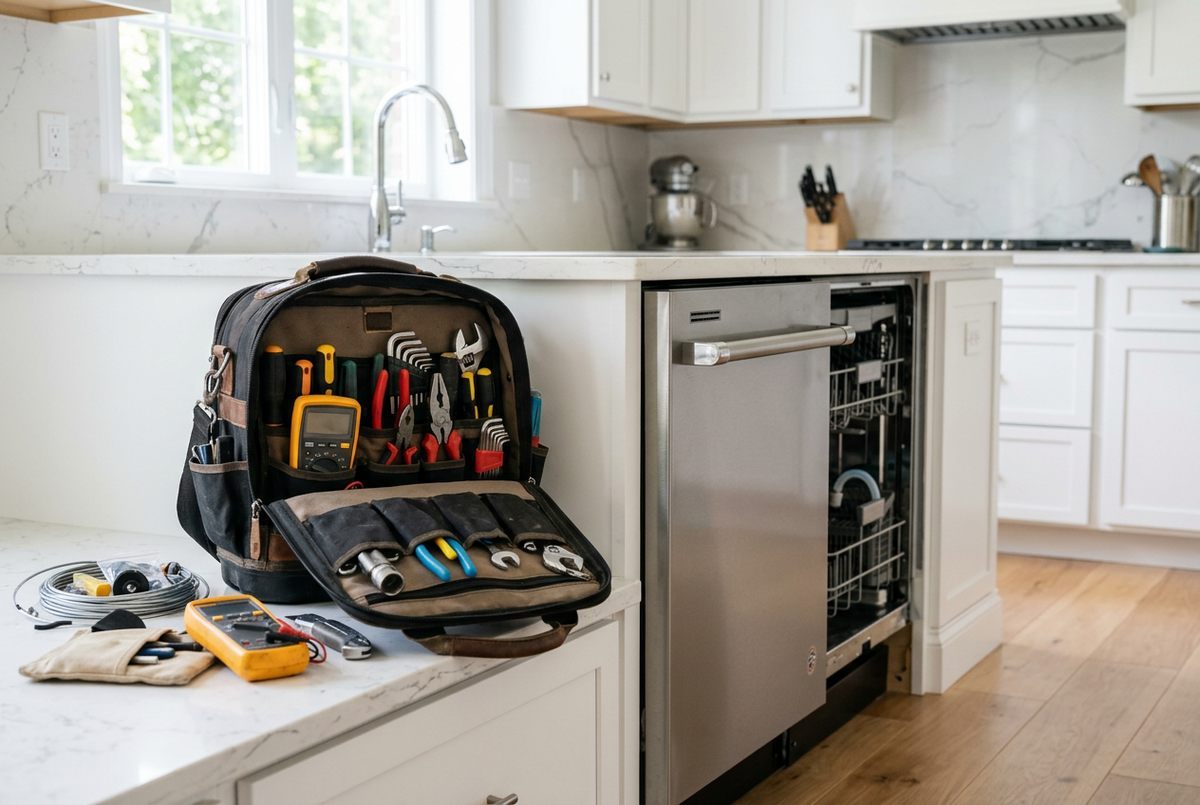
Logan Appliance Repair service team · field-reviewed before publishing
Age tells you something, but not everything
Most household refrigerators run a solid decade or more before big parts start giving out, and past that we pay closer attention. Age alone doesn't decide it, though. We've fixed twenty-year-old units with a bad door switch and a cracked drain line and they kept right on humming. We've also seen units barely out of the box wrecked by a hard summer storm surge. What matters more is how the fridge has been treated, whether anybody's cleaned the condenser coils, and how long it's been running warm. A fridge that struggled for months has worked its compressor a lot harder than one that quit yesterday.
The fault itself matters more than the year
Some failures are simple and worth fixing at almost any age. Bad door gaskets. A stuck evaporator fan, a failed defrost thermostat, a clogged drain, a burned control board after lightning, a water valve that won't shut off. All common, all repairable. Sealed system trouble is a different animal. When refrigerant has leaked out or the compressor is dead, the repair goes deep, and on an older cabinet that may not be the smart play. We tell you which category you're in before you spend a dime. No hedging, no vague talk about "maybe it'll hold."
Can we still get the part?
This is the quiet dealbreaker. Manufacturers stop making parts for old models, and once the supply dries up, a fifteen-dollar plastic bracket turns into a hunt. We check part availability for your exact model number before we recommend a repair. If the piece is discontinued with no equivalent, we say so plainly instead of chasing it for weeks while you live out of a cooler. Sometimes a used or aftermarket equivalent works fine. Sometimes it flat doesn't exist. Either way you'll know before we order anything, not after you've sat waiting.
How we think it through on the visit
We start with what you noticed. Warm sections, water on the floor, clicking, running nonstop, ice showing up in odd spots. Then we test airflow, check the defrost cycle, look over the coils, and read temperatures in both compartments. We're building a picture of whether one part failed or the whole system is just tired. Find a single clear fault on an otherwise healthy cabinet, and we'll say fix it. Find a failing compressor plus rusted-out shelving and a door that won't seal, and we'll say that too. Our job is a straight answer, not a sale.
When replacement honestly wins
There are cases where we'd tell our own kin to go buy new. A dead sealed system on a fridge well past its decade. Liner cracks, or water damage down in the insulation. Several unrelated failures stacking up at once. Discontinued parts with no substitute. A unit that's been limping along for a year and eating electricity the whole time. Newer models also run leaner on power, which adds up. We don't get anything out of pushing you toward a new appliance. We'd rather you hear it from us than figure it out three repairs later. Call us and we'll take a look.
Is an Older Refrigerator Worth Repairing? How to Decide — common questions
Is it worth repairing a fridge that stopped cooling completely?
Sometimes, yes. Total loss of cooling can come from a failed fan, a defrost problem, or a control board, and all of those are repairable. It can also mean the sealed system. Testing tells us which one. We check before recommending anything.
My fridge died after a thunderstorm. Is that fixable?
Often it is. Power surges commonly take out control boards and inverters, and on a lot of models those are replaceable parts. The cabinet and compressor usually come through untouched. Worth having somebody test it.
Should I repair a second fridge in the garage?
Depends on the fault and whether parts are still available. Garage units run hard in Tennessee heat and often need the coils cleaned more than they need repair. If it needs a compressor, replacement usually makes more sense.
How it works
- Step 1
Tell us the symptom
Call us or fill out the form and tell us what you hear, smell, or see. Buzzing, leaking, no heat. Plain talk is fine. We'll ask a few questions and set a visit window.
- Step 2
We come look
A technician shows up in the window, pulls the unit out, and tests it. No guessing games. We explain what failed and why, in words that make sense on your back porch.
- Step 3
We fix it
Common parts ride with us, so a lot of repairs finish on that first visit. If a part has to be ordered, we tell you plainly and set the return date before we pull out of your driveway.
- A real person answers
- Open 7 days
- Written quote before work starts
Why homeowners call us
- Storm-season surge damageLightning and blinking power hurt control boards. You get an oven that lights up but won't heat, or a washer that quits mid-cycle. We test boards and wiring before we replace anything, so you know what the surge actually took out.
- Clay dust and lintRed clay dust and lint choke dryer vents and condenser coils. That's where long dry times and a hot laundry room come from, and it's why a fridge runs nonstop. We check airflow every visit, because a clogged vent kills a good machine slowly.
- Straight talk, no runaroundWe tell you what's wrong and what it takes to fix. If a machine is worn past sense, we say that too, and you decide. No pressure and no jargon. We don't dress up an upsell as advice.
- Independent and localWe're a Nashville crew, not a call center. As an independent shop we repair all major brands. Call us and you get a real person, somebody who knows the roads we drive.
- All major brands, gas & electricIndependent service on Whirlpool, LG, Samsung, GE, Maytag, Bosch, KitchenAid and the rest.
- Straight answersNot worth fixing? We say that out loud, and often it saves you the visit fee.
About this guide
Past the safe checks, it's a job for tools and a meter
Bring your notes from the checks to the call and booking takes no time.
- A real person answers
- Open 7 days
- Written quotes
- All major brands
- Gas & electric
Rather not call? Get a free quote →