Top-rated independent appliance repair across the Mid-South
Microwave Runs, Food Stays Cold
A microwave that runs but doesn't heat has failed on its high-voltage side, and that's a repair for a technician, not a reset and a prayer. You punch in two minutes, the light comes on, the plate spins, the fan hums, and the coffee comes out room temperature. Nothing looks broken, which is the confusing part. Unplugging it and hoping won't get you anywhere. Here's what's actually going on inside.
Call (888) 857-9883- Real people on the phone
- 7 days a week
- Quote in writing before any work
Taking calls until 5:00 PM CT
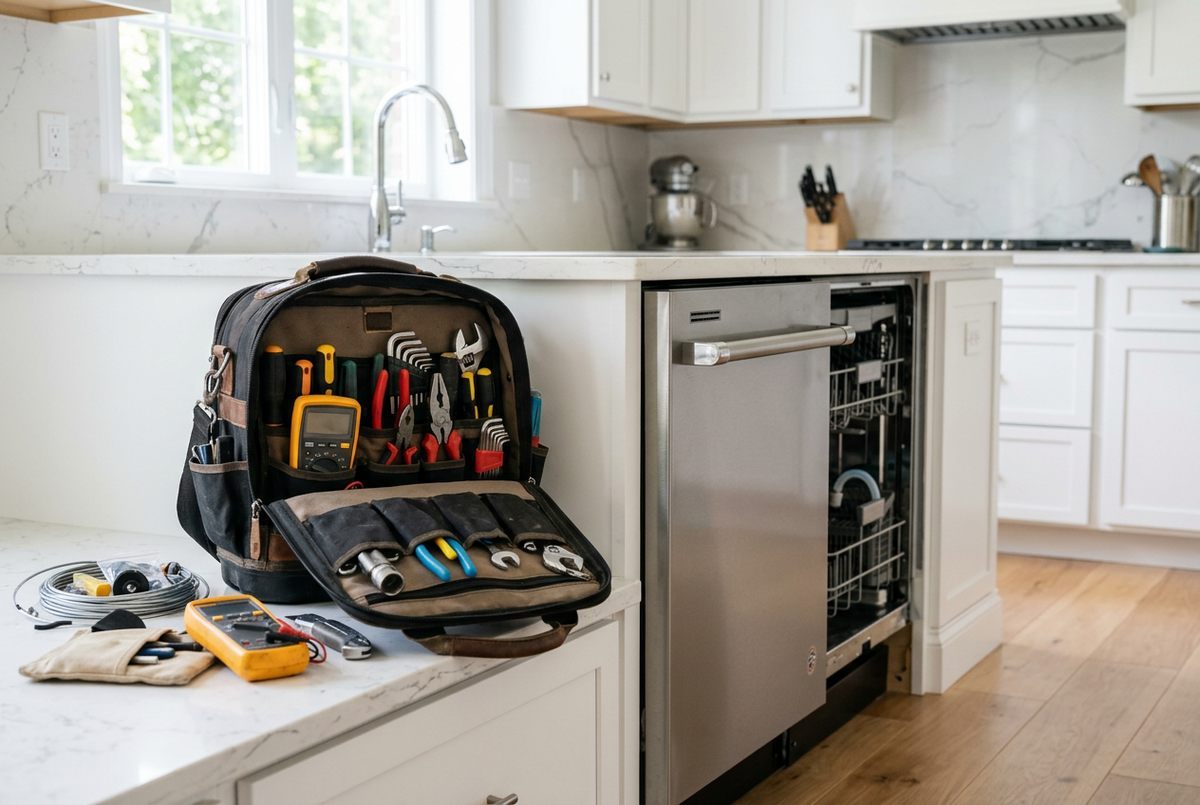
Logan Appliance Repair service team · field-reviewed before publishing
What "runs but stays cold" actually tells us
Your microwave has two separate jobs. One is the show: light, turntable, fan, timer. The other is the cooking, done by a high-voltage circuit that makes the microwaves. Those systems are mostly independent, so when the show still works and the food stays cold, the control side is fine and the high-voltage side has quit. That narrows things fast. It also means the problem sits behind a metal panel next to a capacitor that can hold a serious charge even after you unplug it. We'll say it plain: this is not a homeowner repair. Knowing the symptom does save time on the phone with us.
The usual suspects, cheapest first
First family is simple. A door switch or interlock isn't telling the unit the door is truly latched, and some models will still light and spin but refuse to fire. Second is a blown high-voltage fuse or thermal cutout, often tripped by a storm surge or by cooking with the unit nearly empty. Third is the diode or capacitor in the high-voltage circuit, a common failure and repairable on many units. Fourth is the magnetron itself, the tube that makes the heat. Magnetrons wear out. On a countertop model, that repair sometimes costs more sense than it makes, and we'll tell you so.
Storm season and clay dust make it worse
Around here, summer thunderstorms knock power out and slap it back on hard. That surge is rough on the fuse and the high-voltage parts, especially over-the-range units wired straight to the house. If your unit went cold the day after a storm, mention it. That points us right at the fuse and diode. Separately, red clay dust and grease build up in the vent and grille of over-the-range models. A choked vent runs the cavity hotter, and heat shortens magnetron life. Wiping the grille and washing the filter won't fix a cold microwave, but it helps the next one last.
Safe checks you can do in five minutes
Test with water, not leftovers. Put one cup of tap water in a glass measuring cup, run it two minutes, then touch the cup. Cold water means no heating, plain and simple. Next, look at the door. Does it latch with a solid click, or does it sit loose? A sagging door or a cracked latch tab is worth reporting. Check whether the outlet works using another small appliance, and see if a breaker tripped. Listen while it runs, since a loud buzz or a hum that comes and goes is useful information. Stop there. Don't remove the outer cover, and don't poke inside the cabinet.
What we do that you can't from the kitchen
We discharge the high-voltage capacitor before anything else. That one step is why this job belongs to a technician. Then we test the fuse, the diode, and the capacitor with proper meters, check every door interlock switch for continuity, and measure the magnetron's filament. We also look for scorch marks, a burned waveguide cover, or arcing damage that tells us why the part failed. Then we're straight with you about whether the fix makes sense on your model. A built-in unit is often worth the parts, a countertop often isn't. Call us and tell us what you saw and heard.
When it is time to book
Related guides
Microwave Runs, Food Stays Cold — common questions
Is it safe to keep using a microwave that doesn't heat?
We'd unplug it. If it isn't heating, something in the high-voltage circuit failed, and running it puts stress on the rest. There's no benefit either, since it can't cook. Shut it off and call us.
Can a power outage really kill a microwave?
Yes. A surge when power snaps back can blow the high-voltage fuse or take out the diode. It's one of the more common calls we get after storm nights. Often it's a repairable part, not the whole unit.
Should I just replace a cold microwave instead?
Depends on the unit. Over-the-range and built-in models are usually worth repairing, since replacement means cabinetry and wiring. Small countertop models often aren't. We'll diagnose first and give you the honest read.
How it works
- Step 1
Tell us the symptom
Call us or fill out the form and tell us what you hear, smell, or see. Buzzing, leaking, no heat. Plain talk is fine. We'll ask a few questions and set a visit window.
- Step 2
We come look
A technician shows up in the window, pulls the unit out, and tests it. No guessing games. We explain what failed and why, in words that make sense on your back porch.
- Step 3
We fix it
Common parts ride with us, so a lot of repairs finish on that first visit. If a part has to be ordered, we tell you plainly and set the return date before we pull out of your driveway.
- A real person answers
- Open 7 days
- Written quote before work starts
Why homeowners call us
- Storm-season surge damageLightning and blinking power hurt control boards. You get an oven that lights up but won't heat, or a washer that quits mid-cycle. We test boards and wiring before we replace anything, so you know what the surge actually took out.
- Clay dust and lintRed clay dust and lint choke dryer vents and condenser coils. That's where long dry times and a hot laundry room come from, and it's why a fridge runs nonstop. We check airflow every visit, because a clogged vent kills a good machine slowly.
- Straight talk, no runaroundWe tell you what's wrong and what it takes to fix. If a machine is worn past sense, we say that too, and you decide. No pressure and no jargon. We don't dress up an upsell as advice.
- Independent and localWe're a Nashville crew, not a call center. As an independent shop we repair all major brands. Call us and you get a real person, somebody who knows the roads we drive.
- All major brands, gas & electricIndependent service on Whirlpool, LG, Samsung, GE, Maytag, Bosch, KitchenAid and the rest.
- Straight answersNot worth fixing? We say that out loud, and often it saves you the visit fee.
About this guide
Safe checks done and it still misbehaves? That's a real fault
Mention which checks you ran when you book; it speeds up the visit.
- A real person answers
- Open 7 days
- Written quotes
- All major brands
- Gas & electric
Rather not call? Get a free quote →