Top-rated independent appliance repair across the Mid-South
What Local Weather Does to Home Appliances Through the Year
Weather here breaks appliances in specific ways, and most of it is predictable by season. Your dryer worked fine in March. Now it's July and it takes two cycles to dry towels. Or a storm rolls through, the lights flicker, and the fridge never comes back on. Humidity, red clay dust, hard freezes, summer storms, each one does its own kind of damage. Here's what we see month by month, and what you can check yourself.
Call (888) 857-9883- Real people on the phone
- 7 days a week
- Quote in writing before any work
Taking calls until 5:00 PM CT
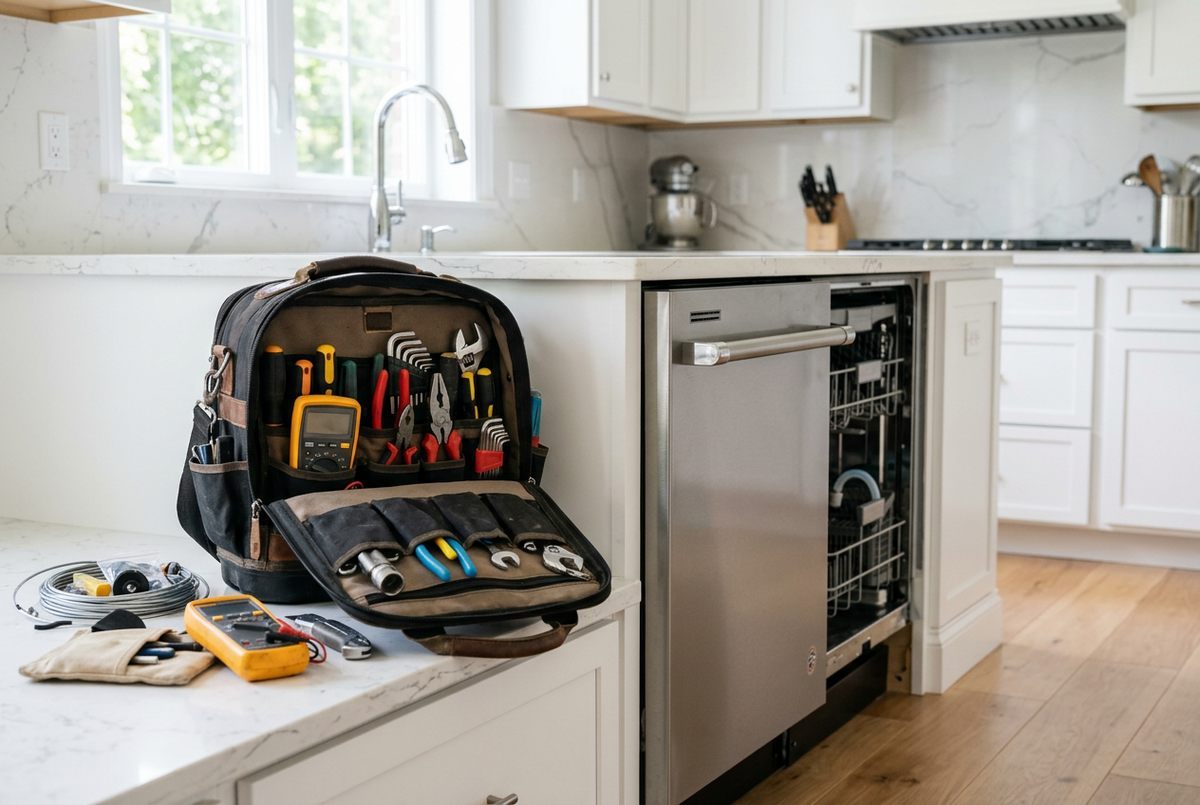
Logan Appliance Repair service team · field-reviewed before publishing
Spring: storms, surges, and dead control boards
Storm season is our busiest stretch, and the reason is simple. Lightning and grid blips send a surge down the line, and modern appliances are mostly computers. The board fries, and then the unit looks dead or acts strange. A washer fills but won't spin, an oven shows a blank display, a fridge has lights on and no cooling. Plug sensitive appliances into a quality surge protector rated for large loads. If a storm is coming and you're leaving town, unplug what you can. After an outage, give the fridge a few minutes before you judge it, because compressors need time to restart. If it's still warm an hour later, call us.
Summer: heat, humidity, and refrigerators that can't keep up
A refrigerator dumps heat into your kitchen. When the kitchen is already 84 degrees and the condenser coils are packed with dust and pet hair, it runs nonstop and still drifts warm. Ice cream gets soft and the freezer frosts over. Same story with a garage or basement freezer, since most aren't built for a 100-degree garage. Pull the fridge out and vacuum the coils underneath or on the back. Leave a few inches of air behind it. Humidity shows up too, as sweaty door gaskets and standing water in the drain pan. Wipe the gaskets clean, then check the seal with a dollar-bill tug test.
Fall: clay dust, lint, and dryers that take forever
Dry fall air kicks up fine red clay dust, and it gets into dryer vents, HVAC returns, and the back of your washer. Add lint to that and the vent line chokes down. Now the dryer runs hot, trips its thermal fuse, and quits mid-cycle. Or clothes come out damp while the drum feels scorching. Fall is the right time to clear the whole vent run, not just the lint trap. Go outside and watch the vent hood while the dryer runs. You want strong warm airflow. Weak or none means a blockage. Check that the flap opens, too. Birds and wasps nest in them.
Winter: freezes, cold garages, and washers that won't fill
Hard freezes hit the laundry room and garage first. A washer on an exterior wall can freeze its inlet lines, and then it'll hum, fill slowly, or not fill at all. Ice makers on fridges near unheated walls do the same thing. Garage refrigerators swing the other direction. When the room drops below about 38 degrees, the fridge thinks it's cold enough and stops running the compressor, so the freezer thaws. Before the first freeze, insulate exposed supply lines and keep the laundry room above freezing. Never use an open flame or torch on a frozen line. If lines are already frozen, shut off the water valves and call us.
Pre-season checks worth twenty minutes
Four times a year, walk the house. Vacuum the refrigerator coils and check the door seals. Clear the dryer vent from the trap out to the hood. Pull the washer's inlet screens and rinse the grit out, since clay silt clogs them. Look under the dishwasher and behind the washer for slow drips and rust stains. Listen, too. A new grinding, buzzing, or thumping usually shows up weeks before a part actually fails, and catching it early keeps a small repair small. Stay out of back panels, sealed refrigerant systems, and anything gas. Those need tools and training. We're an independent shop and we handle all major brands. Reach us.
What Local Weather Does to Home Appliances Through the Year — common questions
Can a power surge really kill a refrigerator?
Yes. The control board is the usual casualty. You'll see lights working but no cooling, a blank display, or fans that never start. A surge protector rated for the appliance's load helps a lot during storm season.
Why does my garage freezer thaw in winter?
Most freezers use a room-temperature thermostat. When the garage gets cold, the unit stops running and the contents slowly thaw. Look for a model rated for garage use, or keep the space above roughly 40 degrees.
How often should the dryer vent be cleared here?
Once a year works for most homes. Make it twice if you dry heavy loads, have pets, or live on a gravel road where clay dust never lets up. Weak airflow at the outside hood means clear it now.
How it works
- Step 1
Tell us the symptom
Call us or fill out the form and tell us what you hear, smell, or see. Buzzing, leaking, no heat. Plain talk is fine. We'll ask a few questions and set a visit window.
- Step 2
We come look
A technician shows up in the window, pulls the unit out, and tests it. No guessing games. We explain what failed and why, in words that make sense on your back porch.
- Step 3
We fix it
Common parts ride with us, so a lot of repairs finish on that first visit. If a part has to be ordered, we tell you plainly and set the return date before we pull out of your driveway.
- A real person answers
- Open 7 days
- Written quote before work starts
Why homeowners call us
- Storm-season surge damageLightning and blinking power hurt control boards. You get an oven that lights up but won't heat, or a washer that quits mid-cycle. We test boards and wiring before we replace anything, so you know what the surge actually took out.
- Clay dust and lintRed clay dust and lint choke dryer vents and condenser coils. That's where long dry times and a hot laundry room come from, and it's why a fridge runs nonstop. We check airflow every visit, because a clogged vent kills a good machine slowly.
- Straight talk, no runaroundWe tell you what's wrong and what it takes to fix. If a machine is worn past sense, we say that too, and you decide. No pressure and no jargon. We don't dress up an upsell as advice.
- Independent and localWe're a Nashville crew, not a call center. As an independent shop we repair all major brands. Call us and you get a real person, somebody who knows the roads we drive.
- All major brands, gas & electricIndependent service on Whirlpool, LG, Samsung, GE, Maytag, Bosch, KitchenAid and the rest.
- Straight answersNot worth fixing? We say that out loud, and often it saves you the visit fee.
About this guide
When the easy checks change nothing, it's time for a tech
Describe what you found and we'll take it from there. Booking takes about a minute.
- A real person answers
- Open 7 days
- Written quotes
- All major brands
- Gas & electric
Rather not call? Get a free quote →